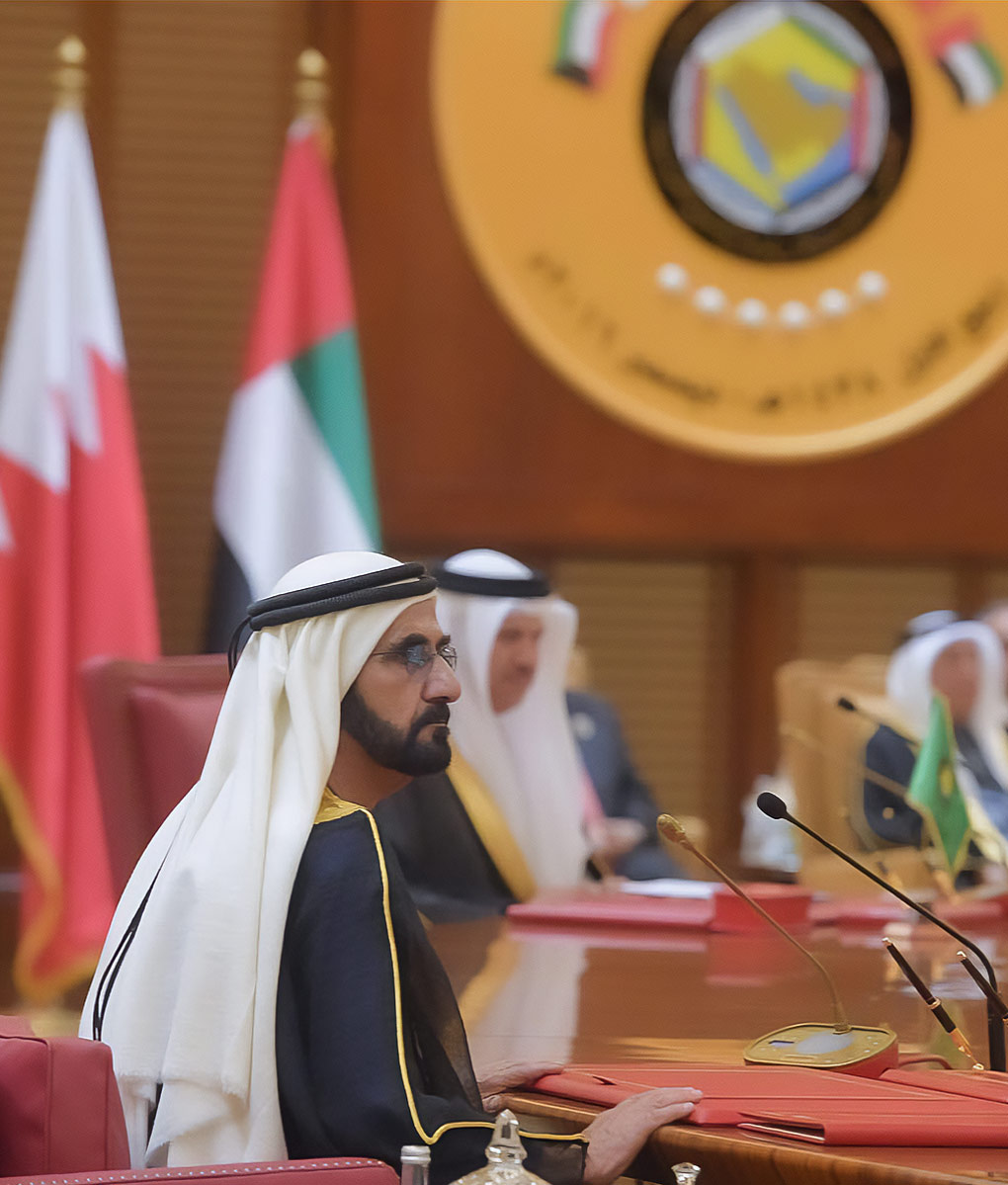
I am pleased to welcome you. I also welcome the convening of this conference, which brings together highly distinguished delegates and eminent speakers, and addresses an issue of great significance - not only for emerging markets - but the entire world.
At a time when the global economy is undergoing the transition to an entirely new era, there is a need to expand, and a need for a concerted international effort to facilitate this transition and ensure its universality. We hope that this conference and the fact that it is being convened, for the first time, outside the OECD area, marks a step in this direction.
We, in the UAE, are firmly determined to keep up with these changes. We have, at a relatively early stage, drawn up the necessary plans to ensure that the requirements for positive interaction with the new economy are in place. We have had to move in several directions at once, namely: promoting awareness of information culture; improving education and rethinking its curricula and tools; initiating infrastructure projects for the new digital economy; launching the e-government initiative which uses the Web as a major tool in the management of services, and the completion of tasks, both within government departments and in cooperation with the business sector.
We realise that what we have so far achieved is, by any standards, pioneering. However, we also realise that we are only at the beginning of the road, and there is still a great distance to cover. We are confident, however, that we are on the right track. We clearly understand that numerous tasks are yet to be undertaken in areas of legislation, communications, human resources and administrative organisation. We believe we have the ability to succeed. We are determined to do just that.
Ladies and gentlemen, e-commerce, which you are gathered here today to discuss, is one of the main causes of the radical changes our world is currently witnessing. All countries are undoubtedly eager to adjust to these transformations, as smoothly and as safely as possible. Yet a host of constraints and challenges appear to stand between the majority of developing countries and the fulfilment of their aspirations.
The greatest of these challenges, in our opinion, is the technological gap between the industrial countries and developing countries. It is most unfortunate that this gap continues to widen.
During the 20th century, we have seen the world divided, at one time, between advanced countries and developing countries, and, at another time, between the rich countries of the North and the poor countries of the South. It appears that the 21st century divide will be between communities with access to information and those without.
We all have to wonder about the potential impact of such a gap - not only on the stability of the global economy - but on the security and tranquillity of the whole world. We also wonder about a world singing the praises of globalisation and the Global Village while its true wealth, which is information, is concentrated in the hands of a few countries.
Such concentration is further deepened by a growing tendency towards monopoly of information by industrialised countries, through the extension of intellectual property rights to include even applied aspects of knowledge, such as medical processes and genetic engineering achievements etc.
Honourable conference members, the widening of the knowledge gap is denying most developing countries the opportunity for true participation in the new global economy, thereby exposing them to many risks beginning with the economy and extending to include overall stability and security.
When we speak of one world, one global economy, one international media city, we should also remember that security in the world is also indivisible. This in itself is an additional incentive for industrialised countries to assist in facilitating and accelerating entry of developing countries to the digital economy. We intend to make this subject our main focus during this year's World Economic Forum in Davos.
I take the opportunity of the convening of this conference to call for an initiative to establish an international alliance devoted to assisting governments and private sectors in developing countries to embrace information technology, with the participation of governments of the OECD countries, concerned international organisations and information technology firms.
Parallel to that, governments in developing countries shall be required to double their efforts in this area, through increased investment in education and training, and the establishment of appropriate rules and legislation.
Our experience in the UAE provides a good example of cooperation between the government and the private sector - a joint effort to facilitate and accelerate the transformation process. The Dubai e-government programme has achieved marked success. Use of e-commerce has become a priority among a growing number of public and private sector institutions.
Meanwhile, some pioneering government initiatives, such as Dubai Internet City, have helped to propagate and strengthen digital culture, and to improve the transformation mechanisms. E-commerce transactions are expected to multiply several times in the near future.
In conclusion, allow me to express my great pleasure at the selection of the United Arab Emirates as the first country outside the group of industrial countries to host the Conference on E-commerce in Emerging Markets.
Such a selection is in keeping with Dubai's genuine interest in the digital economy, and with Dubai's position as an international centre for major conferences and exhibitions, as confirmed by its selection as the host of the 2003 annual IMF and World Bank Meeting.