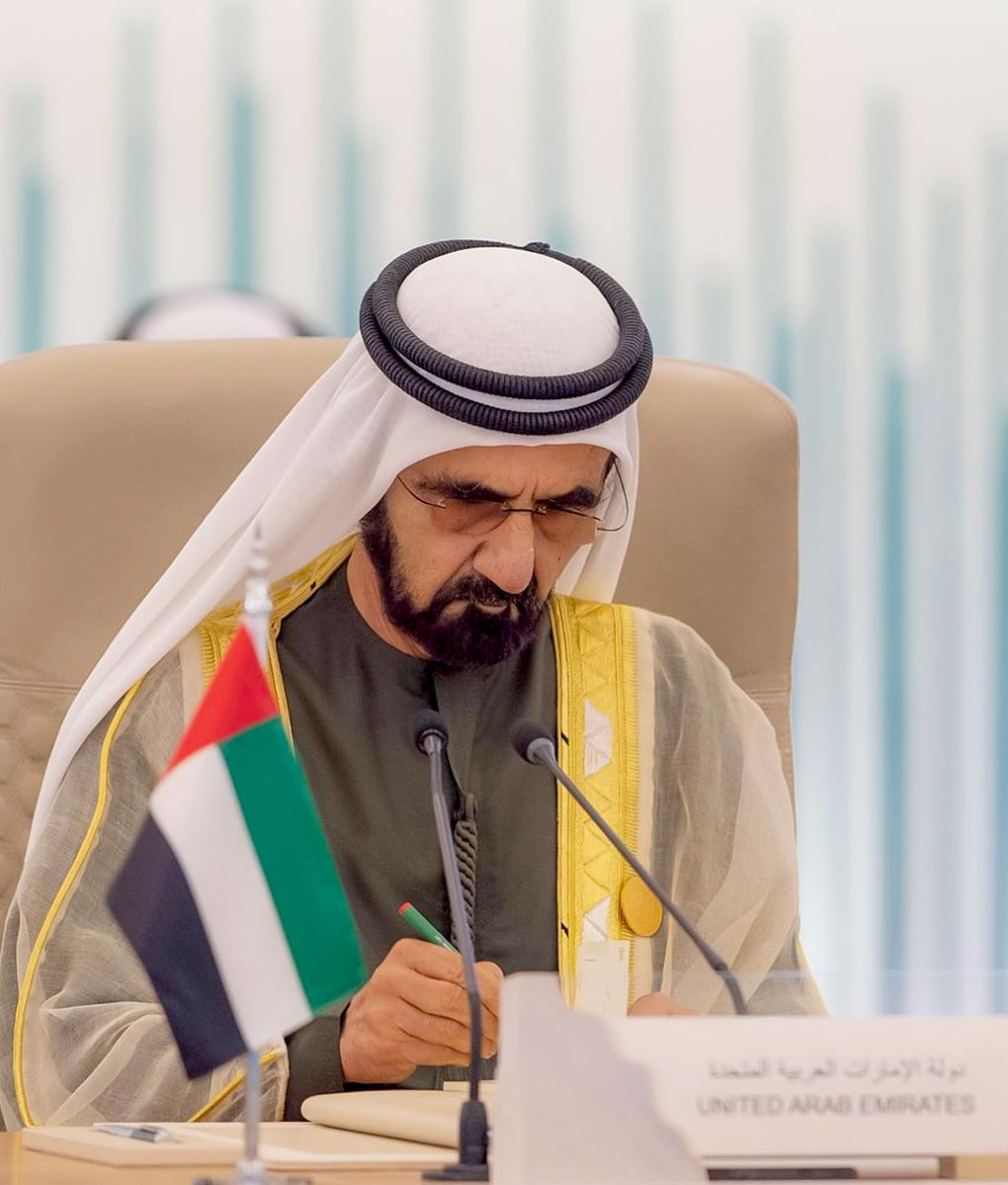
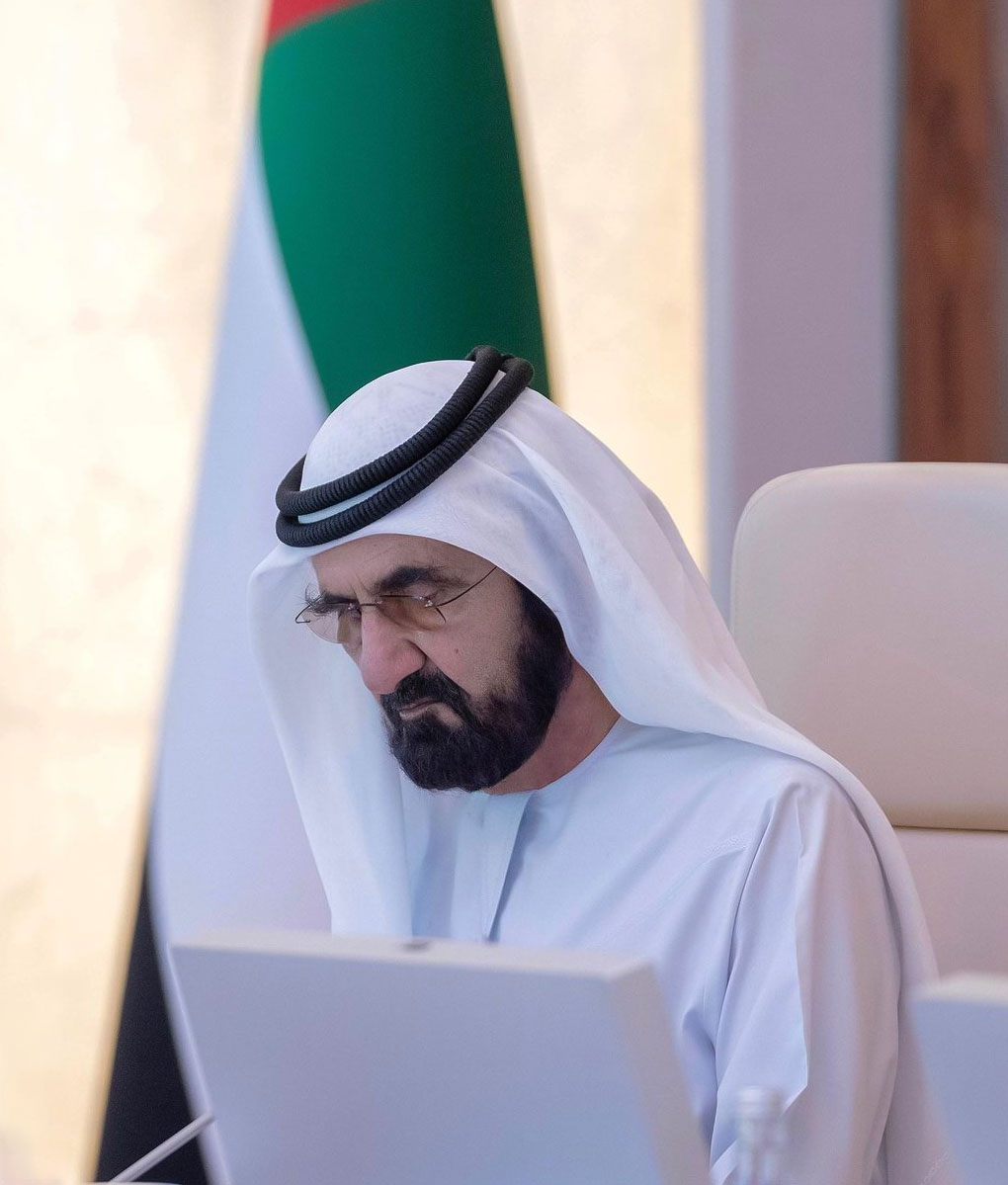
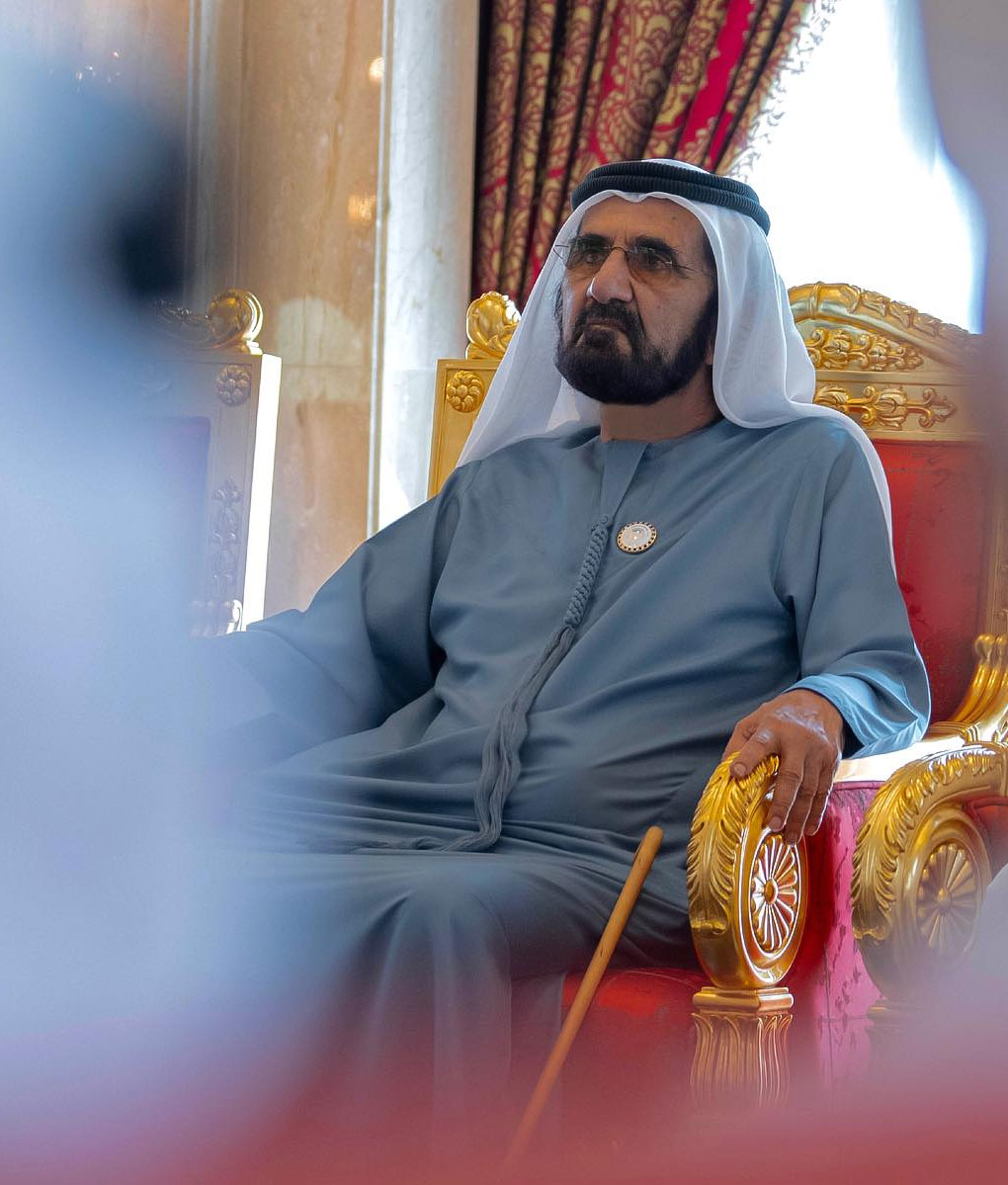
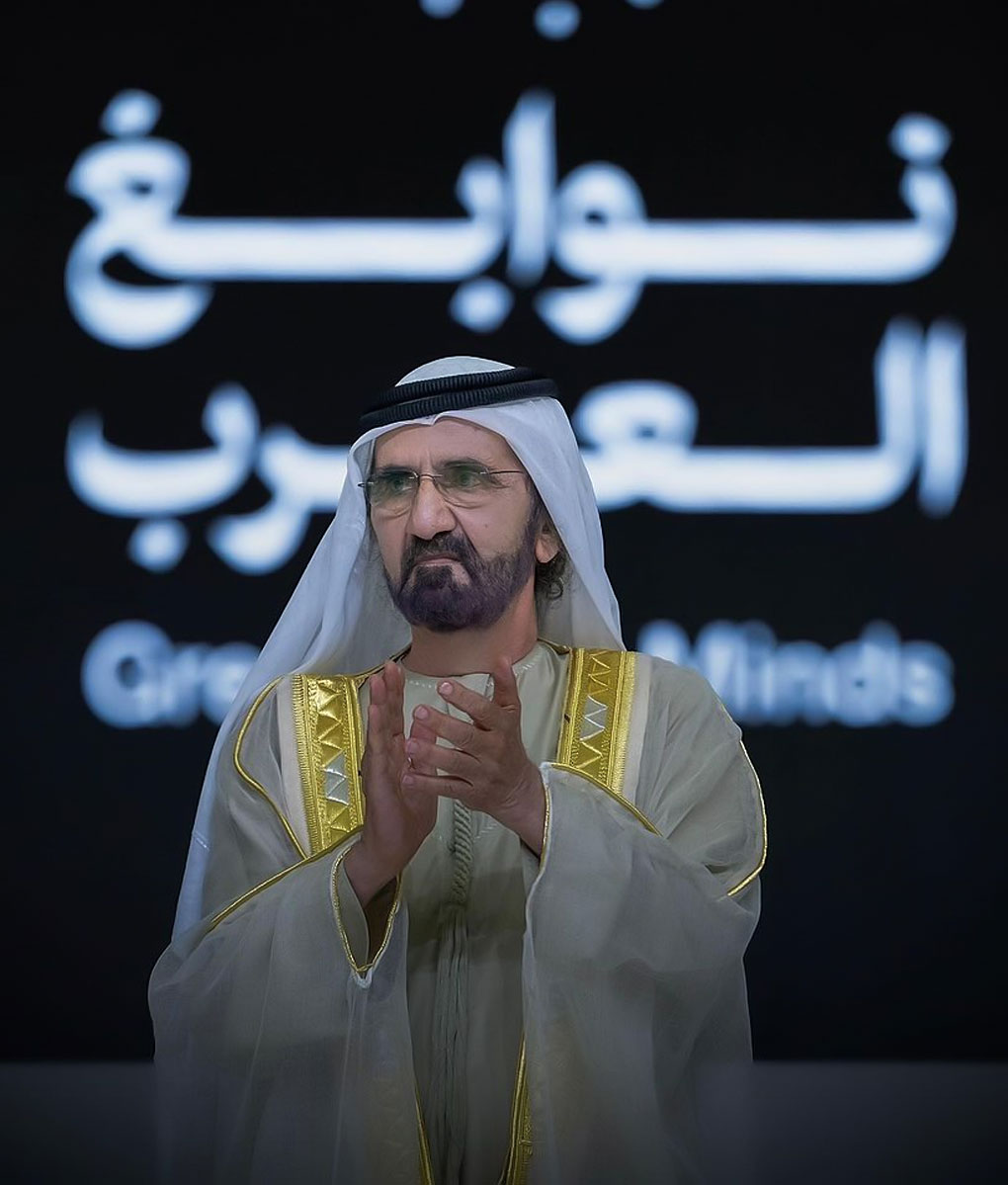
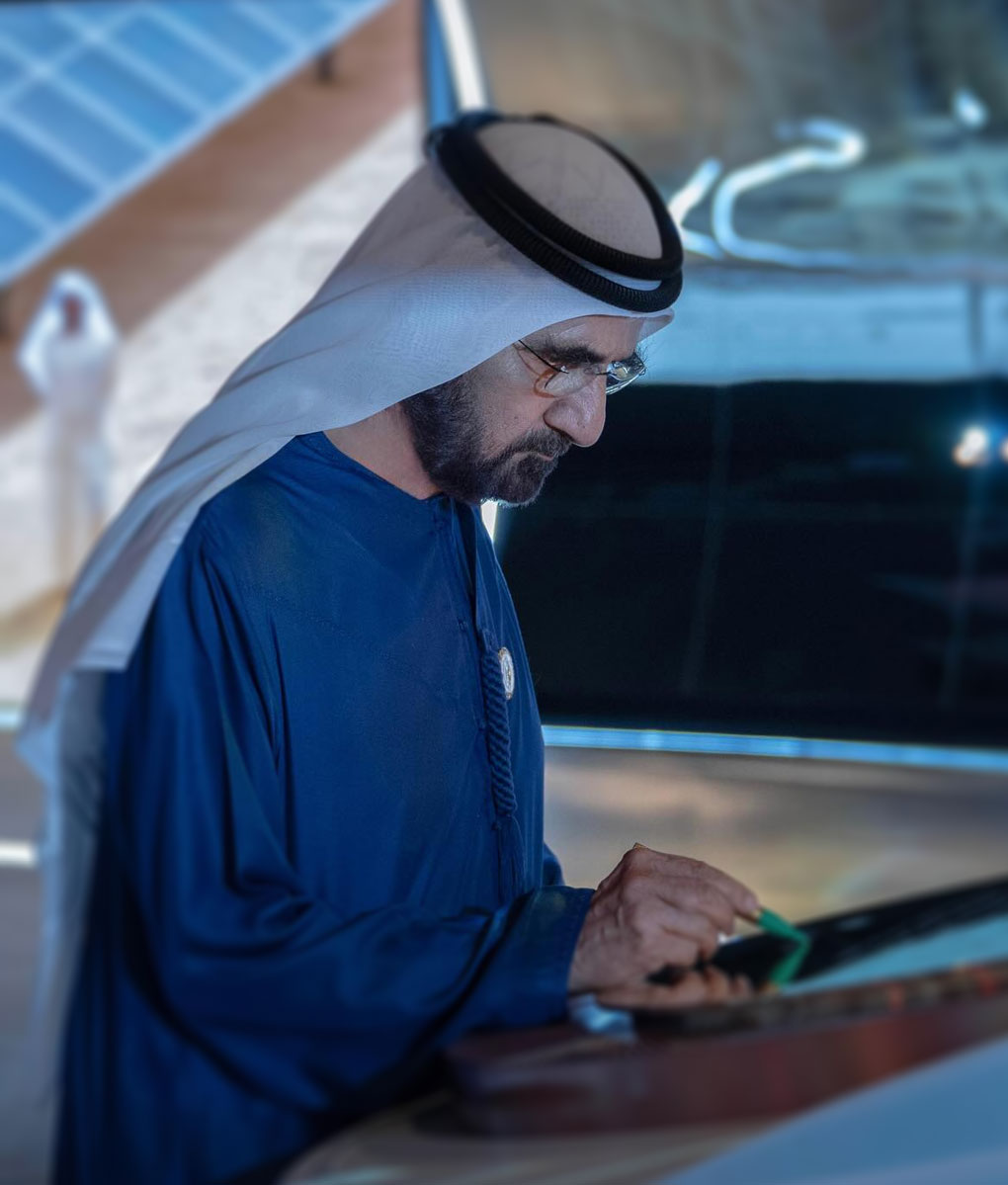
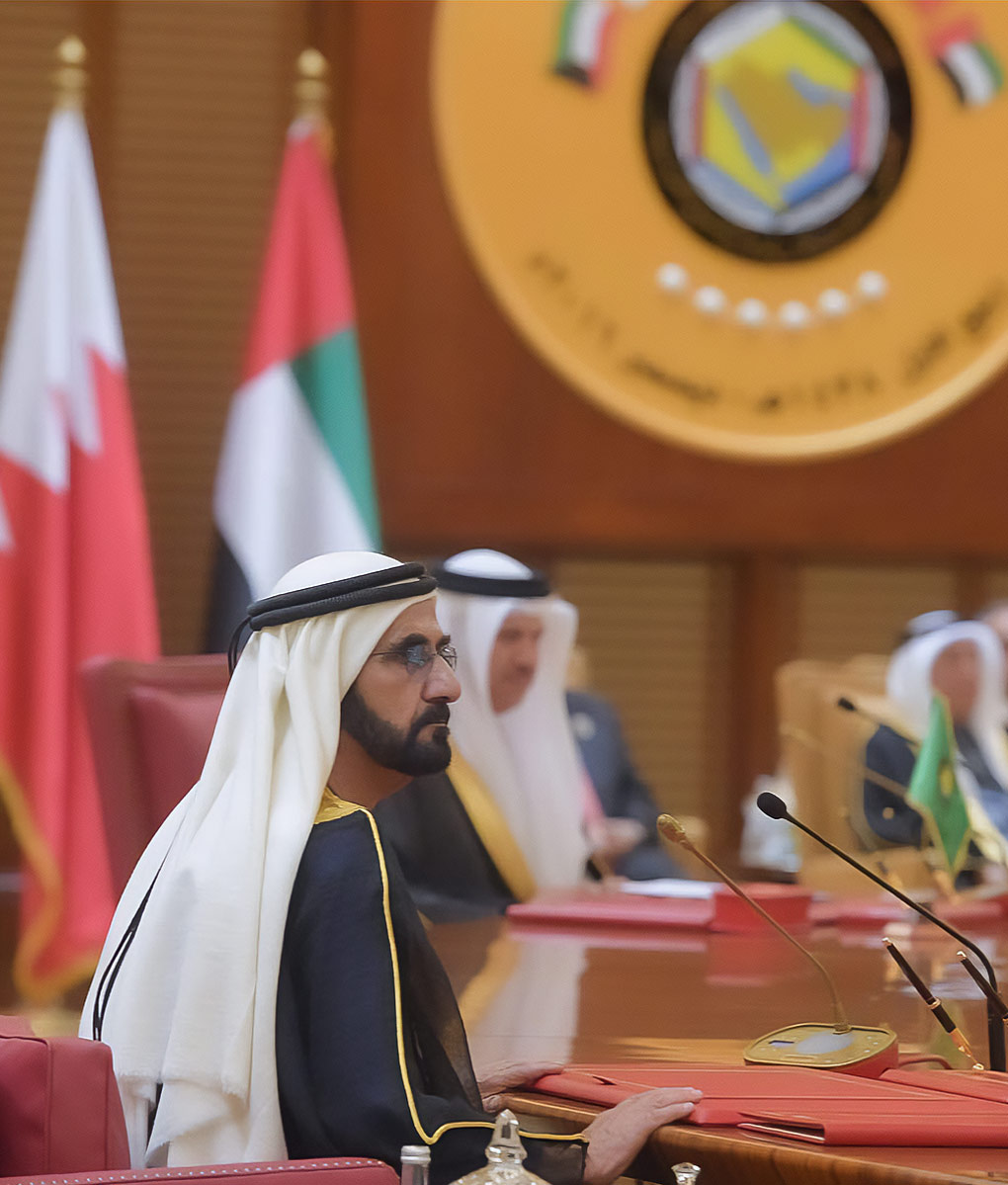
Sheikh Mohammed addresses a conference organised by the Emirates Centre for Strategic Studies and Research
I am pleased to meet with this distinguished group of Arab media professionals. You are most welcome in the Emirates, your home where you are among your people, who are never happier than when they are meeting their peers to discuss ways to liberate the Arab world from the shackles that curb its desire to progress and participate actively in the growth of human civilisation.
Naturally, this is not the first conference to address the challenges facing the Arab world, particularly its media-related challenges. We need more conferences in order to assess the truth of the situation and to share knowledge. Media is a key issue of our time. It has penetrated the very fabric of life - the heart of economic, political and social activities - at both national and international levels. In the Emirates, this has prompted us to accord the media the importance it deserves with this and other such conferences, with the establishment of Dubai Media City, with the Arab Journalism Award, the Arab Media Forum, with the development of media tools in the Emirates and with the increasing amount of freedom permitted.
Yes we need more conferences, but we also need more work and greater efforts to train personnel and improve performance and to be more serious and fearless when it comes to communicating the news.
Before I reveal my vision of the challenges that the Arab media faces in the Information Age, I would like to point out that I am not among those who put more weight on the media than it can handle or demand what it cannot supply. The media does not exist in a vacuum, nor does it operate in isolation from the active forces in state and society. It is part of an integrated whole - a part that greatly influences the other parts. If we compare society to a ship, then the media sits in the pilothouse. It helps to steer the ship, controls its speed and brings it safely back to port on schedule, whether on calm or rough seas.
In fact, the Arab media has played this role since the early stages of the Arab awakening and modernisation. Media professionals have always been among the pioneers of enlightenment and progress. They were the heralds of good news and of bad. Among them were champions unafraid to speak the truth because conscience was their only censor. For them, the public good took priority over the private, the community over the individual, the homeland over everything.
But this pioneering role suffered when the Arab world was plagued by totalitarian thought and rule. When these leaders discovered the magic of the media they rushed to clamp down on it and to divert it from its real task, changing it so that it served those in control of the country rather than the country itself, so that instead of exposing mistakes it was used to cover them up, so that instead of a forum for dialogue among vital forces in society it became a weapon to denounce rivals and others' viewpoints.
With the increasing number of defeats and the failure of development oppressing society it became impossible to suppress the facts and those who failed to do so pointed the finger at others, blaming either internal or external conspiracies. The media was quick to justify failure rather than explain it, to portray the ones who had failed as victims so that they did not have to face any consequences, but also to create sympathy and appreciation instead of subjecting them to interrogation or allowing them to be called to account.
Fortunately, this period of Arab history is nearly at an end. It is no longer possible to sell illusions, to justify failure with manufactured excuses or to re-label defeats as victories. Technology has increased people's access to information and has forced the Arab world with all its states, governments and societies to face the realities and challenges of the new age.
The media's first challenge was that of credibility as people discovered that their national media had been presenting them with untrue images of themselves, their countries and the world that they lived in.
The media also had to face a challenge in the form of competition, but how could it compete when it was bound by the modes of work that it had used for decades? How could it face this invasion from space when it was bound by laws designed to control the media and suppress opinions?
The truth of the matter is that the media responded to this challenge very slowly. The foreign media was the main source of news and information. There was a vacuum. And a vacuum doesn't wait for anyone - it yields to whoever steps in and takes the initiative. The vacuum was apparent to everyone and while there were attempts to fill it, these attempts were limited to switching from radio transmission to satellite and repackaging the old. Then some of our brothers came along with new satellite channels that, despite a variety of opinions, acted like a huge rock dropped into the stagnant water of the media. The ripples created numerous media projects and new satellite channels in response to issues of credibility and competition.
It is natural for a change from one state to another to involve mistakes and shortcomings. Change causes friction between the old and the new, the customary and the unfamiliar, and it creates disagreement about work styles and how to handle things. This disagreement is really about basic concepts such as development, modernisation, reform, managing the state and the right to express one's opinions and defend one's interests. This disagreement is always on the edge of boiling over as a result of hot issues such as Palestine, Iraq and anti-terrorism measures. All of this is typically related to international policies - especially American policies - that involve the region and play a large role in its affairs.
Sisters and brothers,
This introduction was meant to illustrate that you carry a heavy inheritance on your shoulders and that your role is vital at this critical stage in the Arab world's history. There are many questions, a lack of priorities, increasing confusion and doubts plague most ideas and projects now and, perhaps, in the future.
I know that your job is not easy, because the issues that you deal with are not easy. So I shall focus on the most important issue that the Arab world faces today - change and reform - because information, like anything else, must be reformed and changed. It also plays a major role in reform and change.
In this issue there is a critical point, another hot one. The critical issue is a result of the conflict between a national demand for reform and the demands that are thrust upon us by outside forces. This embarrasses the reformers, forcing them to prove the originality of their reform-related ideas so that they are not accused of colluding with foreigners, because the people reject foreign-imposed ideas regardless of goal or place of origin.
The hot issue stems from the dubious relationship between reform and national identity with both its variable and fixed factors, particularly Arabism and Islam.
Any reform or change must make use of the age's achievements and its best models by drawing on the methods that led to that success. As the achievements of this age belong to others, reform has a strong impact on national identity, so people resist reform and change.
You know that this problem has not been resolved, although it has existed since Napoleon's Egyptian campaign marked the first point of contact between the Arab and Islamic world and contemporary Western civilisation in 1798. This problem has surfaced at every significant turning point in Arab and Islamic history. It would eventually disappear beneath the surface again, ignored except by the intellectual elite who isolated themselves from the changes in society while the problem was fermenting in cellars and labyrinths. Groups formed around it - some ended in violence and terror, some by estrangement and alienation and some by withdrawing from society and the world. For most people, this fermentation led to confusion, mental anguish and questions of how to reconcile originality and modernity, and tradition and innovation.
In the Information Age, it is no longer possible for this issue to stay underground. It lies dormant at the core of conflicts and tensions and in the heart of efforts to develop, modernise and change. This forces leaders, intellectuals and media professionals to handle the issue with originality, rationality and courage in order to rid the issue's components of impurities so as to be able to crystallise its essence as an incentive to reform and change.
You, as media professionals, have a great responsibility with regards to this issue, either by not ignoring it or by sensibly guiding the debate about it. But the greater responsibility lies with Arab leaders and their duty to encourage intellectual freedom, protect intellectuals, accept other opinions and sponsor hard work, initiatives and excellence.
Sisters and brothers,
The issue of identity is related to numerous other issues connected with your work and your role. I will discuss only one of these issues - your message to young people. You know that Arab societies are young. Our societies in the Gulf are younger still. Half of the people living in the Arab world are less than 20 years old. They are the future. The future depends on what the young people are like. What messages does the media want to send them? How does the media decide its priorities and choose its programmes? How does it measure the effect that it has on values and conduct? Does the media listen to young people? Does it know their opinions? Does it have a vision and strategies? Or is all this left up to the entertainment channels?
These questions also apply to the media's attitude to women and their problems, to children and their needs, to education and its methods and programmes.
Do you have the answers to these questions?
Perhaps you do. But satisfactory answers must be based on experience, research and plans. Without these, the movement of the media will be random, controlled by improvisation and blind imitation and this will drive highly qualified people away. As a result, the media will lose its power to compete and reach people's consciences and minds. As a consequence, we will fail completely to face the challenges of the Information Age and any other age.
Sisters and brothers,
You will have noticed that I have been talking about the Arab media in general and not about the Gulf media in particular, as the organisers of the conference suggested that I do. This is intentional. In the Information Age, it is difficult to draw a line between Gulf and Arab media. In fact, the line separating Arab and foreign media has almost disappeared. In addition, today's Gulf media has a larger, more effective presence in the Arab world. The Arab world's most important news channels are Gulf channels. The general channels that attract the most viewers are also Gulf channels. The most important newspapers and magazines that address the Arab world are Gulf publications. But the freely available entertainment channels are only Gulf-owned. The Gulf media attract renowned Arab intellectuals, authors and media professionals and the best Arab intellectuals and artists.
This situation doubles the responsibilities of the Gulf media. Its success over the past few years has meant that it is a strong competitor in terms of satellite activities and that it is making its voice heard in various international forums. There are those who are keeping an eye on the Gulf media with bad intentions, waiting for a chance to discredit Gulf countries, their values and traditions.
The media can use its success to correct distorted images of the region, Arabs and Muslims by interacting with the international media and by opening channels of dialogue with intellectuals, politicians, economists, research centres and NGOs.
I can also see the Gulf media playing a role in the Arab world and presenting a 'Gulf message' - a message of enlightenment - to encourage development, to build men up and to call for moderation, dialogue, openness and modernisation at economic, political and administrative levels.
Naturally, this message will not be successful without real openness about the actual situation in the Gulf with all its achievements, aspirations, problems and defects. If our media does not take the initiative and deal with local issues with courage, responsibility and reason, then foreign media will, but with their own point-of-view and to serve their own interests.
Our media in the Gulf needs to take the initiative and to take a good look at the region. We must not be ashamed of problems or shortcomings. Only God is perfect. Our experience with development and administration is limited in comparison to other countries. We are proud of what we've achieved but we know that we have to do much more. The important thing is to work to solve problems, address shortcomings and always look ahead.
Sisters and brothers,
In my address I have touched upon some of the challenges, but I know that you are concerned about others, including preparation and training policies, the safety and living conditions of media people and the need for resources for large projects.
I am, by nature, optimistic about the future. When I see such good faces, my optimism increases. With the progress of political and economic reforms in the Arab world, situations will improve, there will be more transparency and increasing growth, the market will expand, the advertising industry will flourish, there will be an increasing demand for the media and only that which is beneficial to people will remain on earth.
I have great faith in you and in Arab media people. I have no doubt that you are worthy of the messages that you carry, enthusiastic to play your role in change, reform and to face challenges. In the Emirates you will always find brothers who work for the good of Arabs - for their awakening and progress.
I thank you and wish you and the Emirates Centre all prosperity and success. May His Peace, Grace and Blessings be upon you.