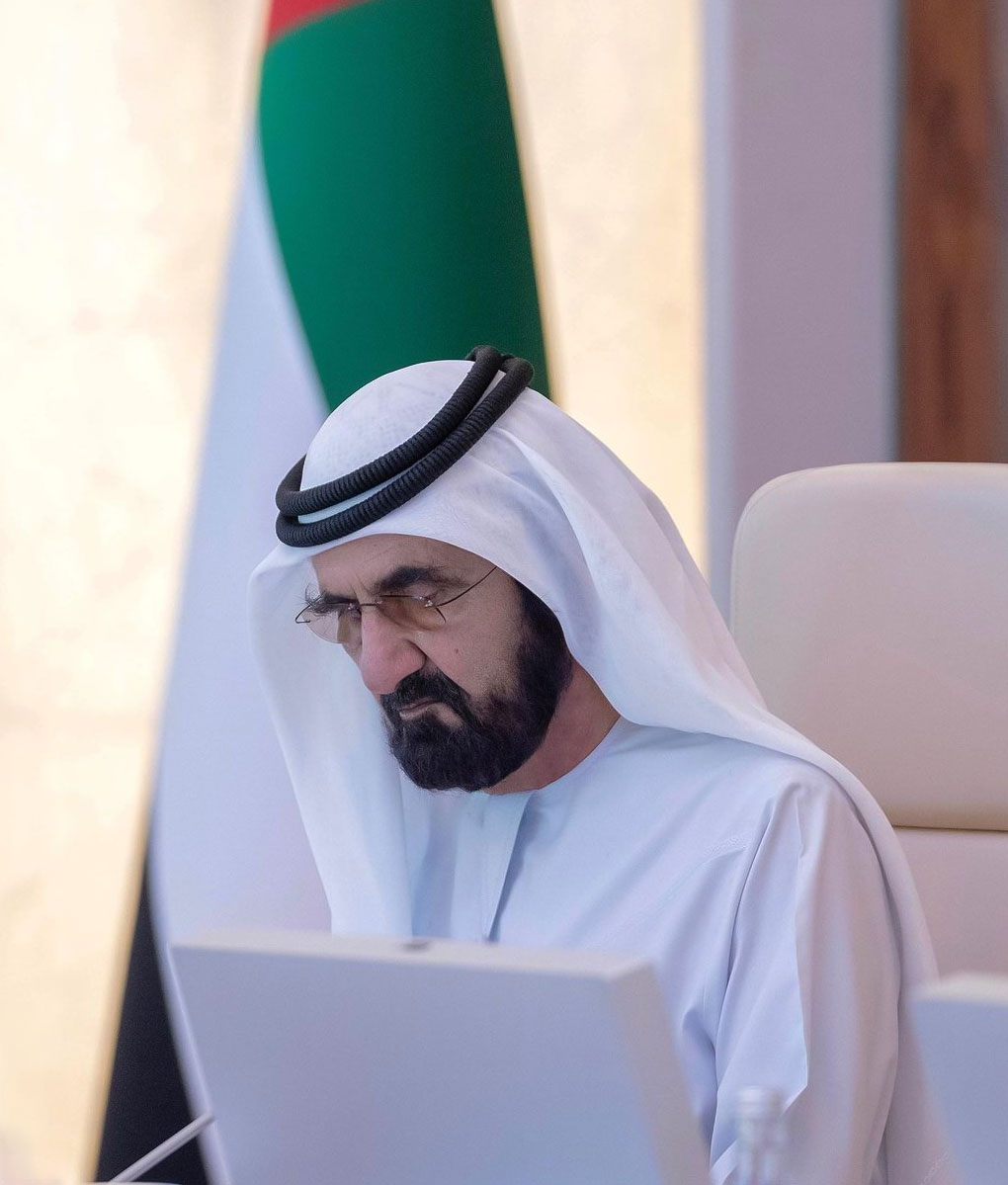
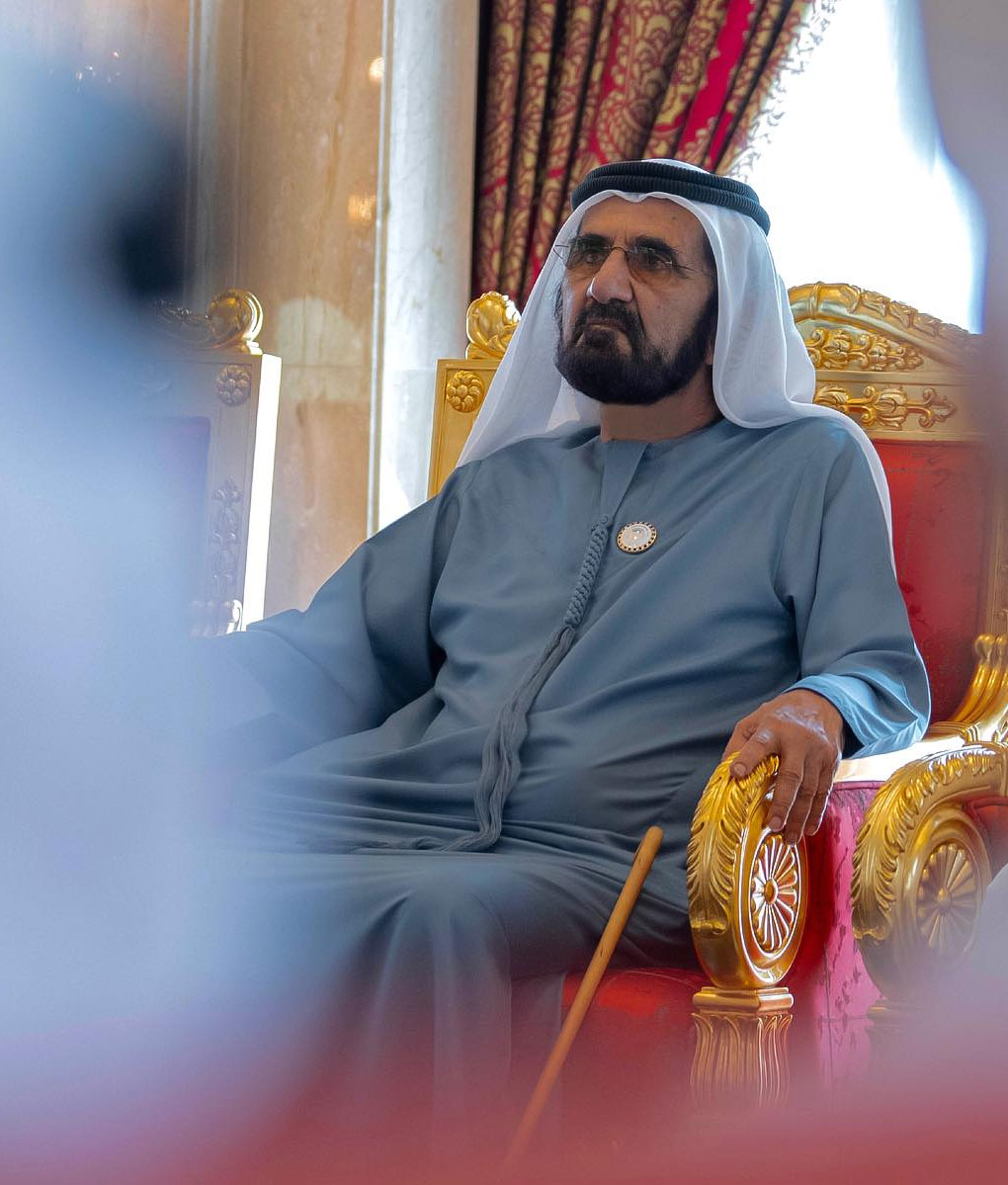
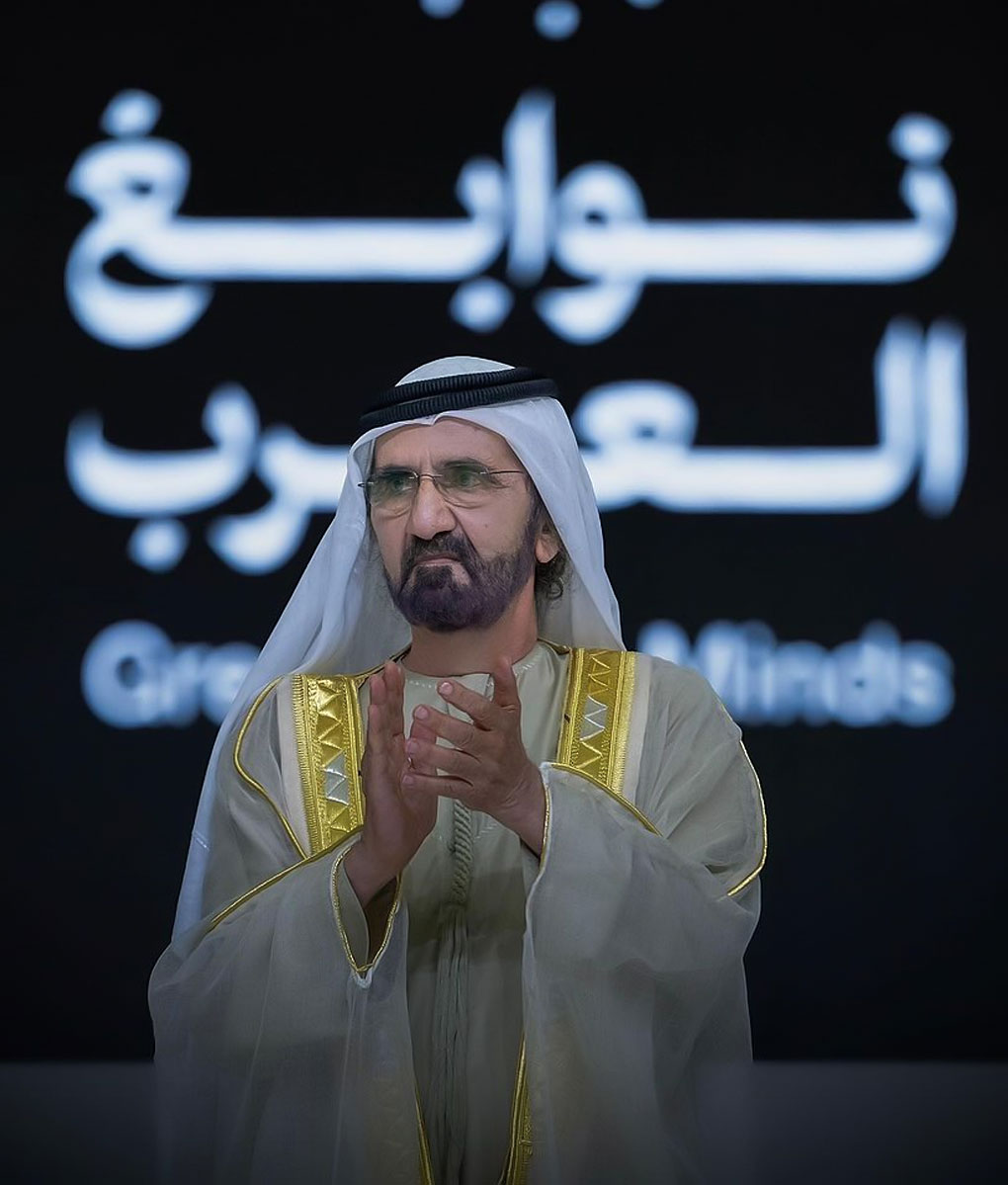
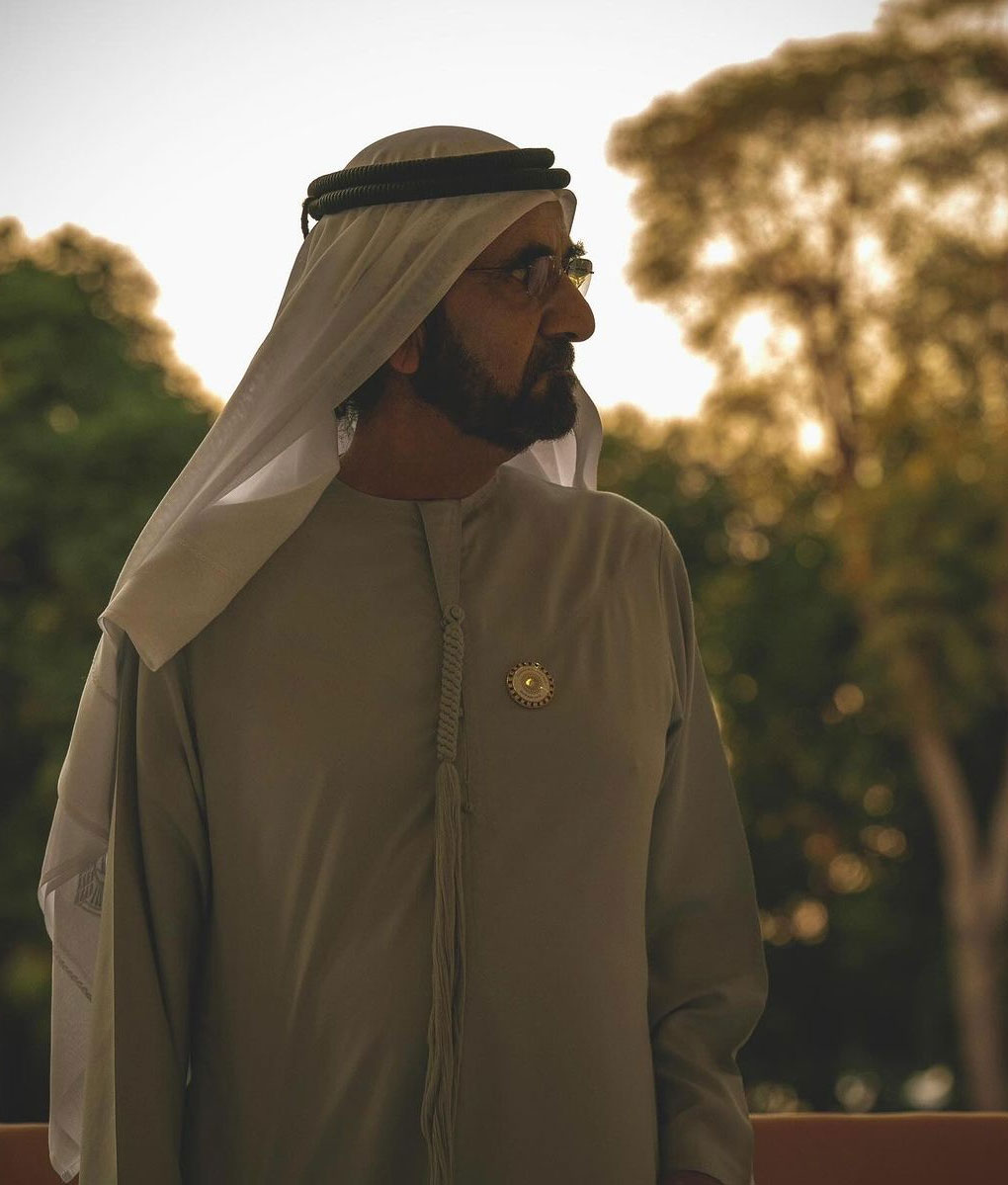
The following is a translation of Sheikh Mohammed's speech at the World Economic Forum in Jordan.
In the name of Allah, The Merciful, The Compassionate:
My brother and friend His Majesty King Abdullah - it is a great honour to have you attend this session - Princes and Princesses, esteemed attendees.
First I would like to mention a few things, after which I am eager to take your questions.
I will give you a brief introduction: Mohammed bin Rashid Al Maktoum belongs to the Bani Yas tribe. The Bani Yas lead and rule several Arab tribes in the eastern part of the Arabian Peninsula and parts of the Empty Quarter, Liwa, Abu Dhabi and Dubai.
This tribe used to manage other tribes and take care of their affairs. My grandfather Sheikh Maktoum bin Hasher was the one who did away with taxes in Dubai in 1903.
I will start and then I will answer your questions.
This tribe has been leading others for 250 years.
Welcome, everyone.
I will not use fancy language, nor will this speech be highly theoretical. I will base my speech on the experiences of the past thirty-five years, years in which I lived with two great leaders - the late Sheikh Rashid and our President Sheikh Zayed, may Allah prolong his life - and participated in the building of the UAE and Dubai.
These years were rich in experiences and practical lessons. I will discuss some lessons that have contributed to the success of Dubai and the UAE, success that is just the beginning of what we want to achieve.
The first is the UAE's federation. With the regional history at that time, a federation should have been impossible, but Sheikh Zayed and my father challenged that by meeting in February 1968 and agreeing to establish a union between Abu Dhabi and Dubai in an attempt to encourage other emirates to join. The word 'impossible' is not in leaders' dictionaries. No matter how big the challenges, strong faith, determination and resolve will overcome them.
The second is Jebel Ali Port. In the mid-1970s, a number of Dubai's businessmen came to me and said, "You know that you have special standing with your father and that he listens to you. Your father wants to build a new port at Jebel Ali, 35km away from Dubai. We beg you to tell him that we already have a big port at Port Rashid - it is adequate, the country is suffering from stagnation and the new port will lead to overcapacity and losses."
I asked them how they knew about the port project and they said that my father, may his soul rest in peace, had proposed it and asked them for their opinions. When I asked them why they didn't just tell my father what they thought, they said they were too embarrassed. When a suitable opportunity arose, I seized it and told my father what the businessmen had said. He looked at me quietly for a moment and then said, "Oh Mohammed, I am building this port in case the day comes when you are unable to build it."
My father was the first to think of this project. If the project had been suggested to consultants or subjected to an economic feasibility study, it would never have been implemented, but my father went ahead and the project was a great success and the Jebel Ali Free Zone is one of the biggest in the world.
How did my father come up with this project? He had foresight and courage; he had a vision and he did not defer it. The vision is of the future; the place is Dubai; entrepreneurship in that it was a project without regional precedent; courage in implementing the project despite conflicts of opinion; decisiveness in terms of persevering despite criticism, rumours and scepticism; and speed in terms of implementing the project within two years.
When my brother Sheikh Maktoum made me Crown Prince ten years ago, he gave me a choice: I could take the easy path and follow traditional ways of ruling or take the hard way and lead creatively with innovation and excellence and position the country in the lead. I chose the hard way, armed with what I had learned from Sheikh Zayed, Sheikh Rashid and Sheikh Maktoum.
Naturally, the world in 1995 was completely different from the world in the 1970s and 1980s. Dubai's progress in terms of commerce and services is a result of my father's vision and the major projects that he implemented; the changes that are taking place have necessitated a new vision.
Put simply, my vision is to maintain our pioneering position and to continue developing and prospering, which necessitates that we shift to the Knowledge Age as quickly as possible. I was determined that we would be pioneers in the New Economy so that we could position the UAE and Dubai in the lead. I realised that it was easier to have a sound vision and to inspire people than to realise this vision. What is important is the implementation of a work plan that has different phases, each phase consisting of several projects, all of which have deadlines - this requires a lot of skill and a qualified team.
I started to implement my vision, which is based on four primary axes: The first is the government. It was essential that the government be restructured and that the way it functioned be revised. The government is the vehicle for our transformation into the Knowledge Age and the New Economy, so the government must use New Economy tools and ideas.
The government is not an authority over the people but one that serves them. As a result, the best measure of a government's success is the satisfaction of those who deal with it. A job in the government is not just a way of making a living; it is a means of contributing to your country. Government departments are not places for routine, passing on responsibilities and laziness - they should be fields of innovation. There are lots of creative people in government departments who should be encouraged and given opportunities to advance.
A creative employee should have his manager's attention, as should an employee who is not creative so that the latter can be trained to overcome his shortcomings. We want to get rid of the idea that you can either work, make mistakes and be punished or not work, make no mistakes and therefore not be punished. This way of thinking is not limited to offices - it is also prevalent in homes and in people's minds and as the individual, so the society. Do we need a society where people don't work because they don't want to be punished? We want to end the conflict between offices and positions and the suppression and persecution of qualified and promising employees.
In order to restructure the government and improve the way it functions, we measure departmental performance, looking at both employees and managers. We have created training programs, an institute to develop human resources and a program to develop leaders.
I believe that our government is the only one that has key performance indicators for every employee, from the managers to the watchmen.
The biggest change was the shift to e-government. Today, all transactions between government departments and businesses are conducted electronically. Government departments offer 90% of their services online. According to the latest international study, Dubai's e-Government ranks among the world's top ten.
The second axis is human development. In the UAE, we are a small, young society and just 40 years ago our society suffered and education and healthcare were available only to the wealthy. We are very proud of what we've achieved in terms of human development and we have made great progress. As leaders, our mission is to work for our people's well-being and it is not possible to do this without their participation. So our priority is human development because it is an important part of my vision.
The young people of the country are its future - they are its guarantee that development will continue and that stability will prevail. We are preparing them for this future by developing curricula and by providing the best schools, institutes, universities and establishments to promote innovation, creativity and entrepreneurship.
The responsibilities that await these young people are great, but the biggest responsibility lies with those who are in charge, those who take the young people by the hand and encourage and guide them. If we allow the individual to be creative, society will be creative.
We have introduced a number of initiatives to this end: the IT Education Project; Edaad scholarship program; and the Establishment for Young Business Leaders.
Women play a central role in human development. Recently, representatives of the foreign media visited Dubai Internet City and asked whether women were allowed to work. They were astonished when officials explained that 65% of the people working at DIC are women, which means that a lot of people who live in this Knowledge Age know nothing about us.
Women in the UAE have equal opportunities in terms of education and employment. They are in the most important positions, they bear responsibility for some of the most important work and they can set up any sort of business they choose. Approximately 30% of businesses are women-owned.
The third axis is launching and completing projects with exceptional speed. I will talk about some of these projects later.
The fourth axis is convincing the private sector to be part of new projects.
You know that economic freedom in the UAE is as old as the country itself. The government provides an environment conducive to the private sector and encourages and supports it. The irony is that the government has always been more active than the private sector in terms of adapting to the Knowledge Age. The government did not have any pressing need to implement big projects and if the private sector had taken the initiative and implemented these projects it would not be lagging behind the government. After the private sector was reassured of the success of our Knowledge Age projects, it decided to participate. We are counting on the private sector because we want the government to play only a regulatory role.
Comprehensive quality in terms of services, production and government performance: In the age of world trade agreements and e-commerce, you have to compete with the best products and services on the open market. You have to create programs and standards to ensure that you are achieving quality services and production in the public and private sectors.
Creativity, innovation and excellence: With any project, you have two options - you can follow your predecessors or take the initiative and come up with new ideas, new work and new methods. We have achieved a great deal in this regard and we have gained credibility at the international level. Today, we manage airports and ports in big and small countries and we share our expertise and the solutions we have devised in implementing our own projects.
Speed of implementation: The most important thing in the New Economy is the idea that is implemented at the right time, without delay, and in the Information Age, there is no monopoly on ideas. Everything is moving so fast that the speed of execution is no less important than the idea itself because the fastest one wins. We in Dubai implement strategic projects very quickly. In just one year, Dubai Internet City became a reality and today it is a global hub for IT that is home to more than 1,400 companies with over 10,000 employees. As for e-Government, we established it in 18 months.
The construction of The Palm, Jumeirah has begun and the project will be one of the world's wonders. Work has also started on Dubailand, which will be a major tourism attraction, and Dubai International Financial Centre is growing even faster than expected.
Courage in decision-making: When we established Emirates airline, we faced a flood of criticism. Some questioned how this airline could be a success when all the international airlines were suffering losses. Others asked what chance an airline with two planes would have in a region with Gulf, Saudi and Kuwaiti airlines in addition to major international companies.
After September 11th, we surprised the world by signing a $16 billion deal. Many people were astonished and critical, saying that we should look at the many airlines that had been forced to declare bankruptcy but we had realised that the situation was temporary, that the market would recover and that this deal would be very beneficial as part of our expansion strategy. It also restored confidence to the airline industry and we benefited in terms of price and delivery dates.
Today, Emirates is one of the world's biggest airlines, it is first in terms of services and, last year, its profits increased by over 74%.
In Dubai, as in other places in the region, we have sea, desert, sand and palm trees and, like us, they have facilities, services, infrastructure and oil. So what is the secret behind Dubai's success?
It is a special formula that combines a deep-rooted tradition of economic freedom and openness to the world, leaders that focuses on the well-being of the people, an inspiring vision and efficiency in implementing this vision. The contributing factors are well-known - the important thing is the way that they are combined, especially when every factor is comprised of hundreds of details. Birds do not fly with two wings alone - how many feathers are there on each wing?
Here are some points that are worthy of our consideration: in the Arab world, we have to establish social justice; we have to have a peaceful handover of power; we have to have comprehensive development of Arab cities; we have to have free movement of capital; we have to stop taxing SMEs; and we have to develop the rural areas.
Urbanisation cannot exist without justice and the sword of justice has no sheath. We have to stop the brain drain to the West; they should be appreciated in their own countries. We have to solve our problems peacefully. We have to have an Arab court of justice with rulings that everyone respects. We have to help Arabs to get jobs in the Arab market.
The Arab region is currently weak, not just because of military losses but because it has lost its lead in trade. In the 16th century, because of the lack of initiative and innovation and after the crusaders successfully invaded the Arab world and after the Mongols invaded Baghdad in 1260, the Arab nations were able to maintain their strength due to their commercial standing and because they controlled trade between Asia and Europe. The dinar was as strong as the dollar is today. If the economy is a horse and the cart is politics then don't put the horse before the cart. It is the horse that pulls the cart.
If Arab administration were good, the politics would be good, as would the economy, the media and public services.
Arabs must work together or they will all lose. They must take the initiative, because initiative is magic, genius and power. It is people who will shape the future, not machines or capital. I am sure that the whole world is open to one who knows where he is heading. Why should we think about failure when we can think about success? If your vision has no limits, then every time you reach a peak there is another peak to conquer.
It is good for us to sit and talk but it is more important that we stand and work. Let work think. No success with fear and no fear with success.
Thank you.